The following booking deposit and cancellation policy applies.
For Departure Dates
12-Dec-2020 , 25-Jan-2020 , 31-Mar-2021 ,
Booking Deposit : 15 % of the Tour amount.
If you cancle the tour the following cancellation policy will apply
Cancellation received
45 days or more - 15 % including deposit
44 days - 33 Days - 25 % including deposit.
For Departure Dates
12-Dec-2020 , 25-Jan-2020 , 31-Mar-2021 ,
Booking Deposit : 15 % of the Tour amount.
If you cancle the tour the following cancellation policy will apply
Cancellation received
45 days or more - 15 % including deposit
44 days - 33 Days - 25 % including deposit.
For Departure Dates
12-Dec-2020 , 25-Jan-2020 , 31-Mar-2021 ,
Booking Deposit : 15 % of the Tour amount.
If you cancle the tour the following cancellation policy will apply
Cancellation received
45 days or more - 15 % including deposit
44 days - 33 Days - 25 % including deposit.
For Departure Dates
12-Dec-2020 , 25-Jan-2020 , 31-Mar-2021 ,
Booking Deposit : 15 % of the Tour amount.
If you cancle the tour the following cancellation policy will apply
Cancellation received
45 days or more - 15 % including deposit
44 days - 33 Days - 25 % including deposit.


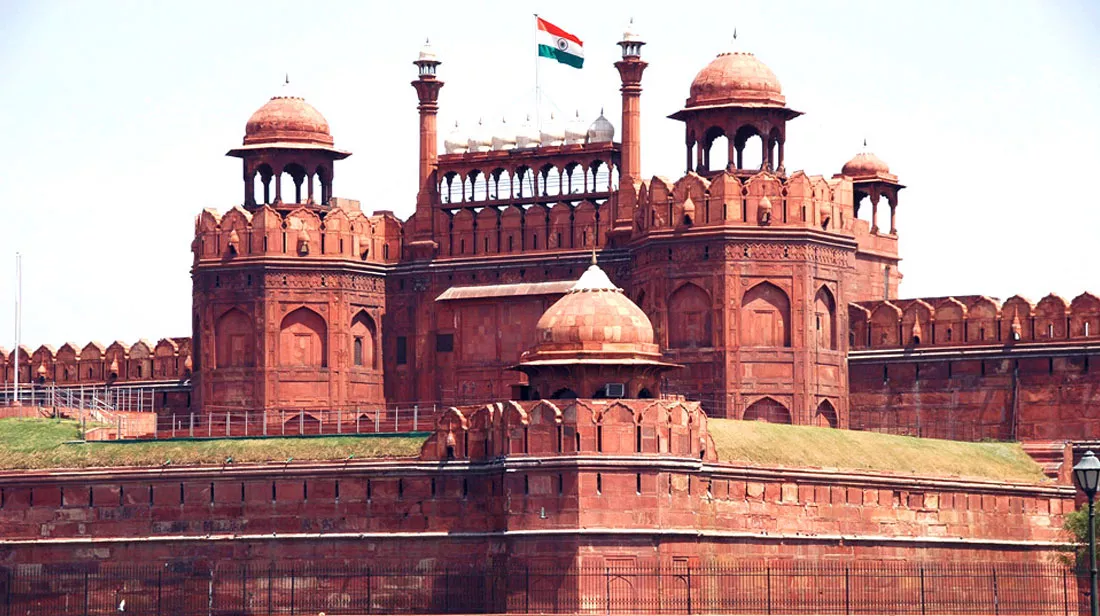 The capital of India is a true reflection of the old and new of India. We explore Old Delhi, starting with the Red Fort Complex*. Named for its massive enclosing walls of red sandstone, it is adjacent to an older fort, the Salimgarh, built by Islam Shah Suri in 1546, with which it forms the Red Fort Complex. The Red Fort is considered to represent the zenith of Mughal creativity which, under the Shah Jahan, was brought to a new level of refinement and each pavilion reveals architectural elements typical of Mughal building, reflecting a fusion of Persian, Timurid and Hindu traditions.
  We start our morning tour with New Delhi and visit Birla House, the Former Residence of Mahatma Gandhi before he was assassinated by Nathu Ram Godse on January 30, 1948. Later we visit the famous India Gate followed by the Houses of Parliament, Connaught Place and Humayun's Tomb*, the first garden-tomb on the Indian subcontinent, built in 1570. We continue to Qutub Minar and its Monuments* Built in the early 13th century the red sandstone tower of Qutub Minar is 72.5 m high. The surrounding archaeological area contains funerary buildings, notably the magnificent Alai-Darwaza Gate, a masterpiece of Indo-Muslim art and two mosques. After the tour of New Delhi, we drive to Agra. On arrival in Agra, we check in our Hotel.
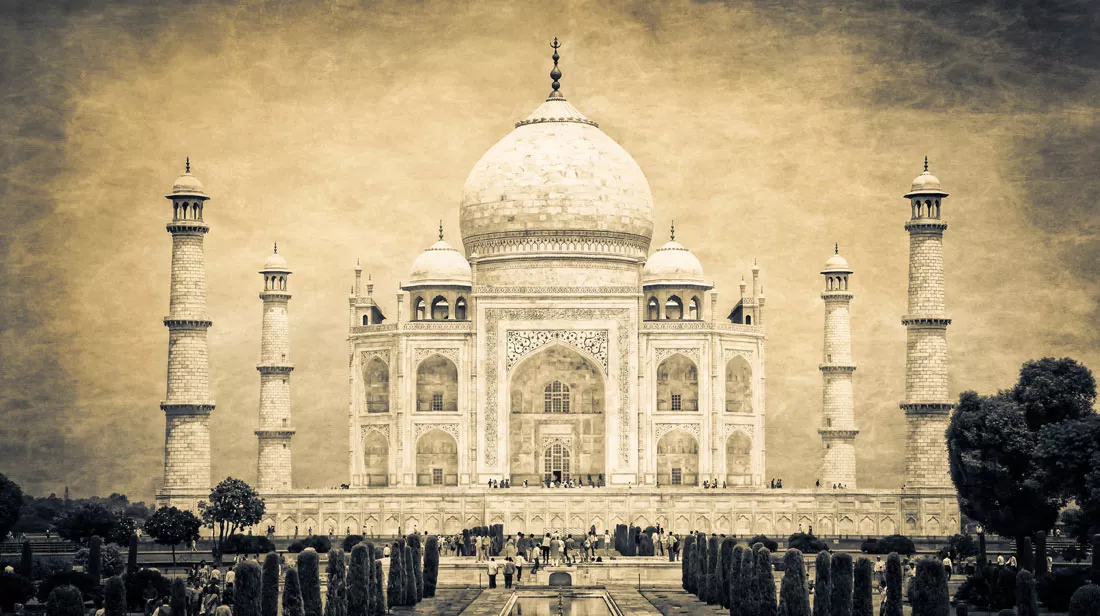 To many today is the most awaited day. We begin our day before sunrise with a visit to one of the most beautiful monuments in the world, the Taj Mahal*. An immense mausoleum of white marble built between 1631 and 1648 by the Mughal emperor Shah Jahan in memory of his favourite wife, the Taj Mahal is the crown jewel of Muslim art in India and across the world. Set in a vast Mogul garden located on the right bank of the Yamuna River, this funerary monument combines elements and styles of Persian, Central Asian and Islamic architecture. After our sunrise experience at this artistic masterpiece, we return to our hotel for breakfast. Later we visit Agra Fort*. This powerful fortress of red sandstone encompasses, within its 2.5-km-long enclosure walls, the imperial city of the Mughal rulers. It comprises many fairy-tale palaces, audience halls and two very beautiful mosques. In the afternoon we visit Fatehpur Sikri*. Built in 1640 by the by the Mughal Emperor, Akbar the Great, it was the capital of the Mughal Empire for about ten years before it was abandoned. The complex of monuments and temples features a uniform architectural style and includes one of India’s largest mosques and the beautiful Mausoleum of Salim Chisty, a revered Sufi saint. Evening is free to loiter around this small-town housing three UNESCO World Heritage sites.
  A countryside drive takes us to Ranthambore, the former hunting ground of the Maharajas of Jaipur. Ranthambore National Park lies at the edge of a plateau and is bounded to the north by the Banas River and to the south by the Chambal River. There are several lakes in the park. It is named for the historic Ranthambhore Fort*, which lies within the national park. The rugged terrain and the dense deciduous forests are major features of this national park, which has among the largest and most diverse collection of wildlife species in India. In the afternoon we take a safari through the National Park, where we encounter a variety of mammals, including tigers. About 150 bird species have their habitat here and in winter a variety of migratory birds can be seen.
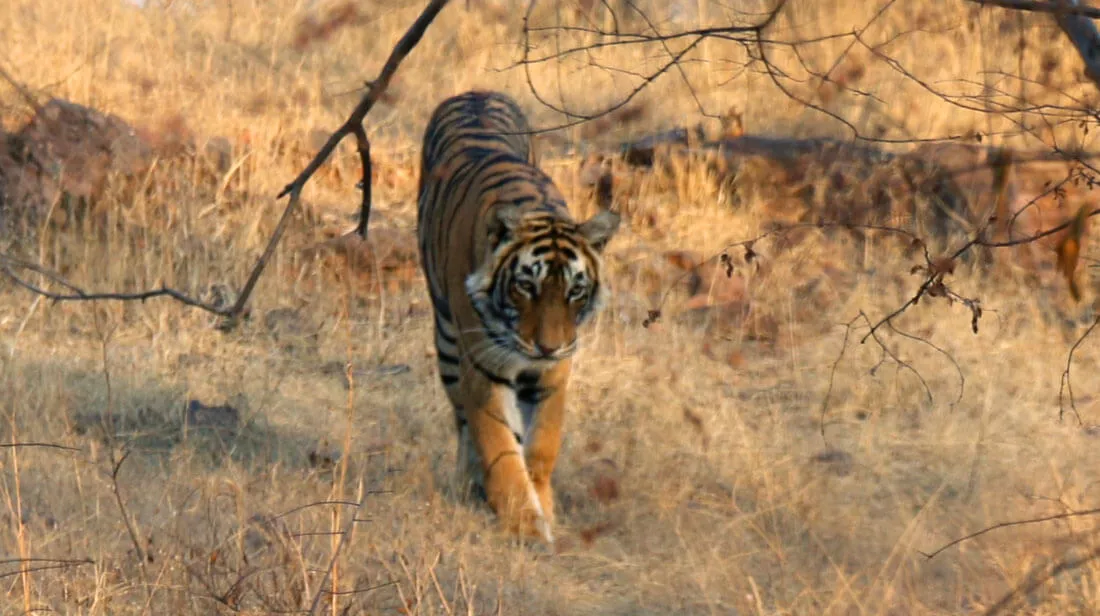 An early morning safari in time when animals are looking out for their prey. We try and spot nilgai, chausingha, chital, chinkara, wild boar, muntjac, jungle cat, ratel, hyena, porcupine, rhesus macaque and black-faced langur. Ranthambhore was declared one of the Project Tiger reserves in 1973 and spotting the big cat in its natural habitat is an unforgettable experience. After our morning safari, we drive to Jaipur, the capital of Rajasthan called the Pink City, since most of the buildings in the old city are made of pink sandstone. In the evening we enjoy our dinner followed by Rajasthani Cultural dance show.
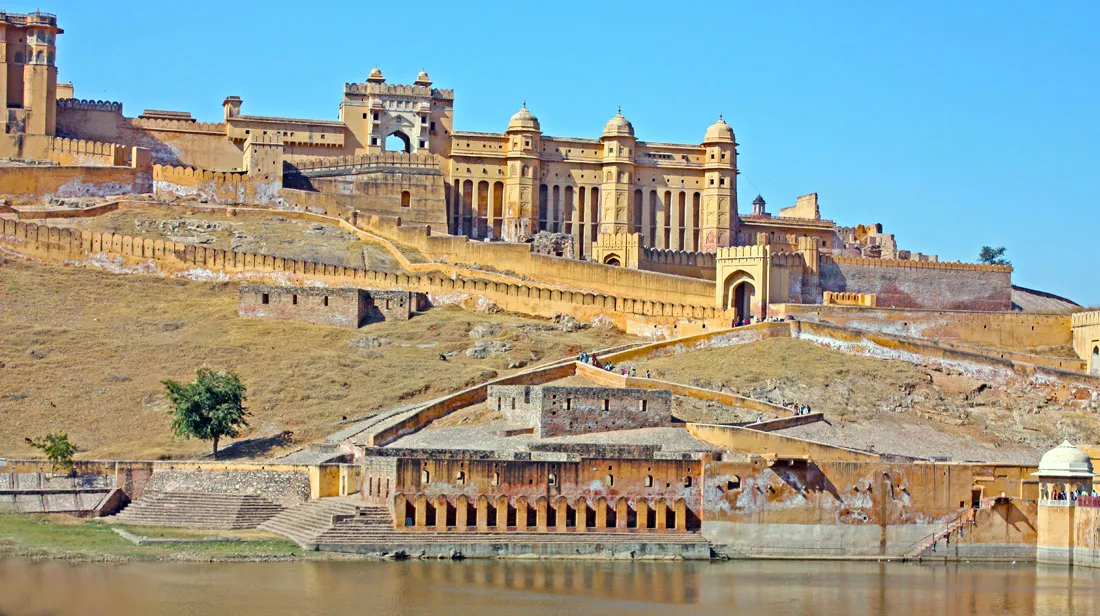 Today we will be treated like the royalty of yesteryear with an elephant ride to the majestic Amber Fort*. Perched on a hillside on the outskirts of town, the palace was constructed by Maharaja Man Singh. The fort which started construction in 1592 comprises a number of gardens, courtyards and palatial spaces derived from Mughal architecture and are a distinguished example of 17th Century Rajput architecture. We return to Jaipur city* to see the beautiful the Hawa Mahal, the Palace of Winds, where the ladies of the royal court used to watch the city from behind its intricately carved facade. We then visit the majestic City Palace, which houses a rare collection of Indian art and the Jantar Mantar*, an astronomical observatory built in the early 18th century that includes a set of some 20 main fixed instruments designed for the observation of astronomical positions with the naked eye. It is an expression of the astronomical skills and cosmological concepts of the court of a scholarly prince at the end of the Mughal period. The evening is free to rest or perhaps enjoy both shopping and get a cultural experience of the bazaar. Jaipur is noted for its craftsmen, skilled in brass inlay, lacquer work and stone setting.
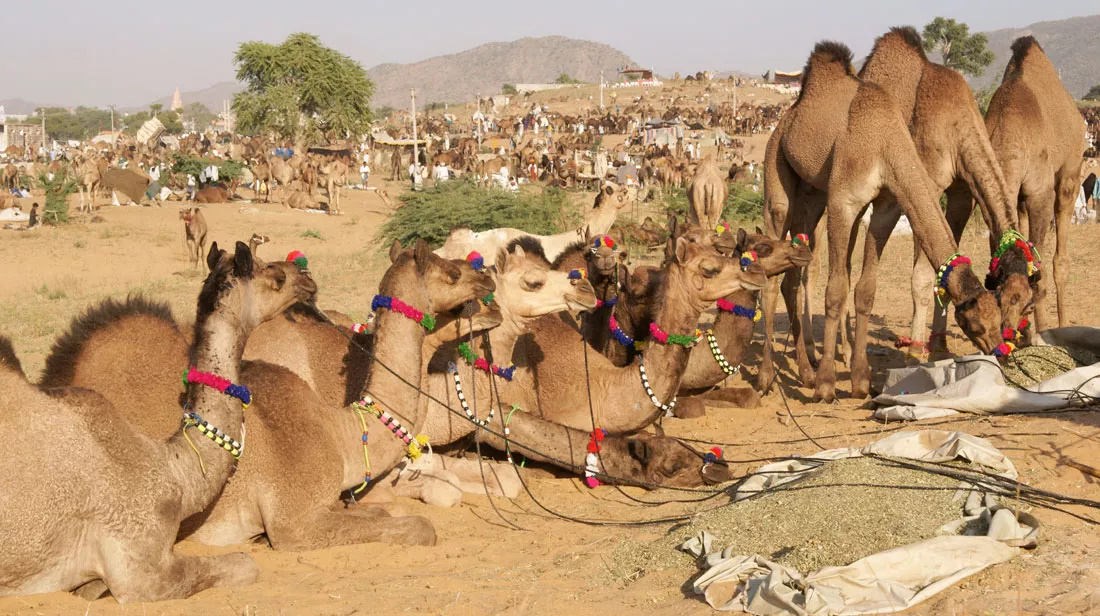 An interesting drive to Pushkar, a bewitching little town on the edge of the desert known for its temples, bathing Ghats, onion domes and chalk-coloured buildings clustering around the holy lake which is said to have appeared when Brahma dropped a lotus flower. It's an important pilgrimage centre and we shall see plenty of Sadhus. Pushkar is renowned for its annual fair and many residents from surrounding villages and towns make their way across the desert in hopes of turning camels into the much-needed cash. Upon arrival we check in at our resort. Later we visit the famous temple of Lord Brahma Temple, said to be one of the few temples in the world dedicated to this deity. Balance of the day is spent enjoying and witnessing the many activities that take place during the Pushkar Camel Fair. One of the nation’s biggest livestock fairs, the Camel Fair draws many from all over north-west India to participate in the buying, selling and negotiating of prized animals. With dancers in the street and skilled artisans selling their goods, the Camel Fair is a jamboree of colour and excitement. Take the opportunity to meet and interact with local Rajputs on this very special occasion.
 Enjoy and witness the many activities that take place during the Pushkar Camel Fair. Breakfast, Lunch & Dinner at hotel.
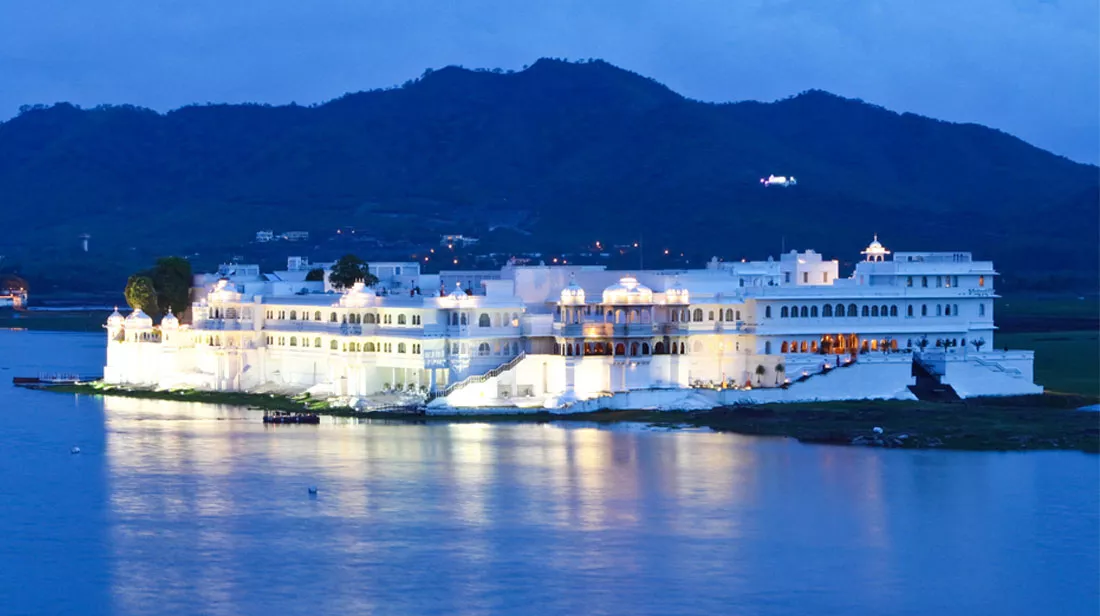 A fascinating countryside as we drive through Rajasthan to Udaipur. Rajasthan literally means “the land of the Rajas” and we notice that still. Udaipur was the historic capital of the former kingdom of Mewar and no other city in Rajasthan is quite as romantic. Misty ochre-shadowed hills and pale, intricate buildings encircle shimmering Lake Pichhola. On arrival we check in our hotel. In the evening we enjoy a boat ride on Lake Pichhola, sailing past the picturesque Ghats and palaces and visit Jag Mandir, a 17th century palace built on an island in Lake Pichhola. The royal family used the palace as a summer resort and a pleasure palace for holding parties.
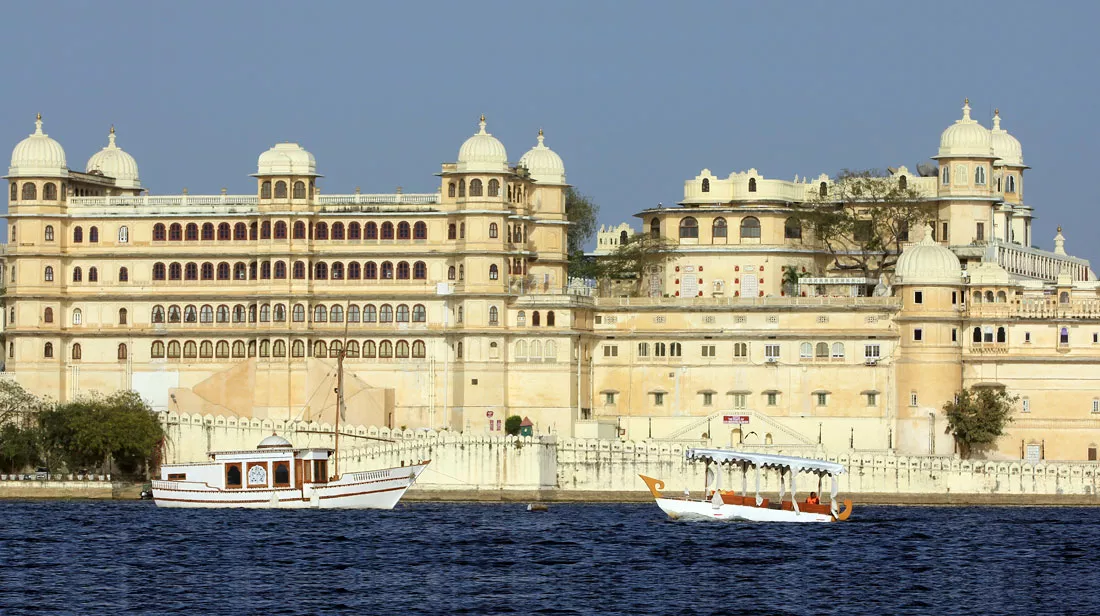 Morning we explore Fateh Sagar Lake and Saheliyon Ki Bari, the Garden of Maids. We then visit the Jagdish Temple, to view some remarkable friezes dating back to 1651. Next, we visit to the enchanting City Palace, which overlooks the Lake Palace located in the blue waters of Lake Pichhola. The palace features several architectural and artistic treasures, such as the stunning peacock mosaics in the Mor Chowk and the murals of the Bhim Vilas Palace. In the afternoon, we drive to Jodhpur. On arrival, we check in our hotel.
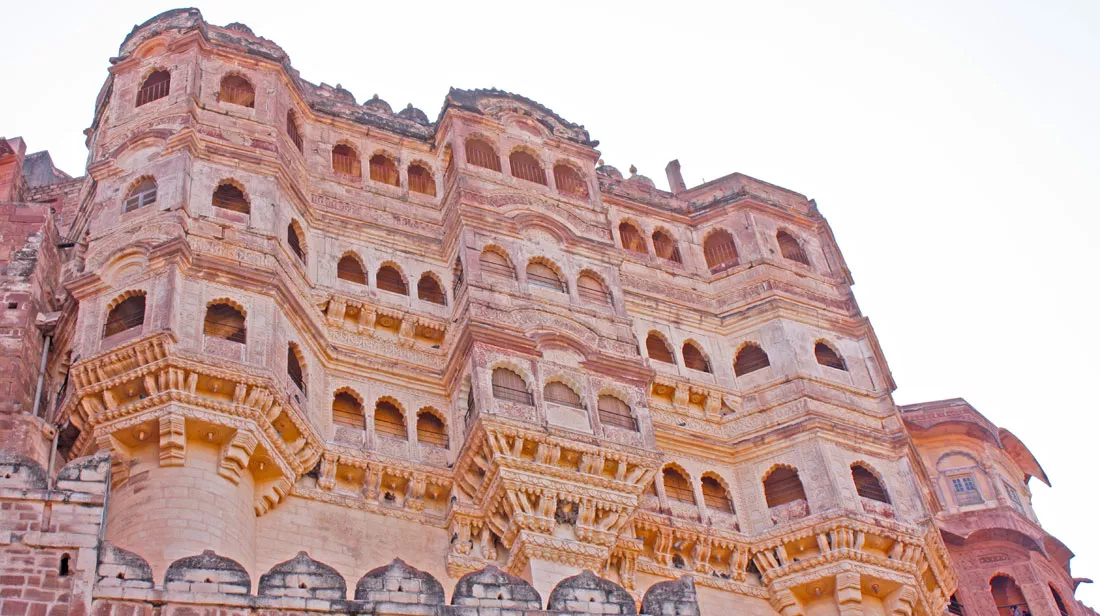 Morning we visit Mehrangarh Fort, one of the largest forts in India. The fort is situated 400 feet (122 m) above the city and is enclosed by imposing thick walls. Inside its boundaries there are several palaces known for their intricate carvings and expansive courtyards. We enter through the Gate of Victory (Jaipal) and explore the series of courtyards and palaces decorated with beautiful terracotta lattice work. The museum in the fort has one of the best collections of the splendid trappings of Indian royalty, including some amazing elephant’s howdahs (essential for glittering processions), miniature paintings and the inevitable Rajput armory and ephemera from ivory inlaid ladies dumbbells to camel bone carpet weights. Later we visit Jaswant Thada, a white marble memorial to Maharaja Jaswant Singh II with an array of whimsical domes. Afternoon we drive to Jaisalmer. Jaisalmer stands on a ridge of yellowish sandstone, crowned by a fort, which contains the palace and several ornate Jain temples. Many of the houses and temples are finely sculptured. It lies in the heart of the Thar Desert.
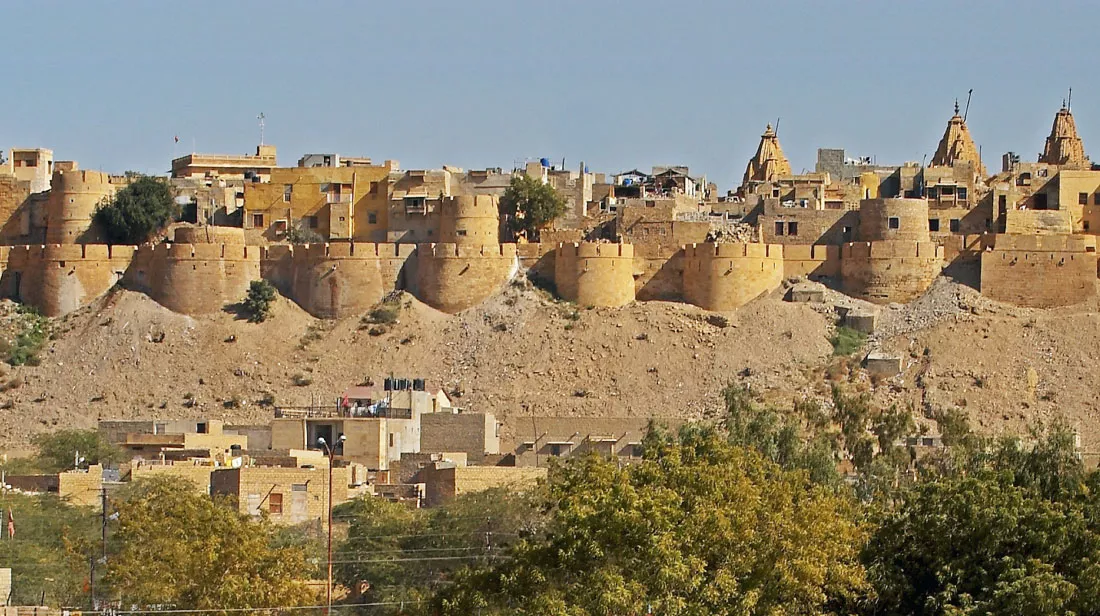 We visit Jaisalmer Fort*, one of the largest forts in the world. It was built in 1156 AD by the Bhati Rajput ruler Rawal Jaisal, from where it derives name. The fort stands proudly amidst the golden stretches of the great Thar Desert, on Trikuta Hill, and has been the scene of many battles. Its massive yellow sandstone walls are a tawny lion color during the day, fading to honey-gold as the sun sets, thereby camouflaging the fort in the yellow desert. For this reason, it is also known as the "Golden Fort". Life within the citadel conjures up images of medieval times as we wander through narrow lanes filled with havelis (mansions), temples, skilled artisans and of course camels.
 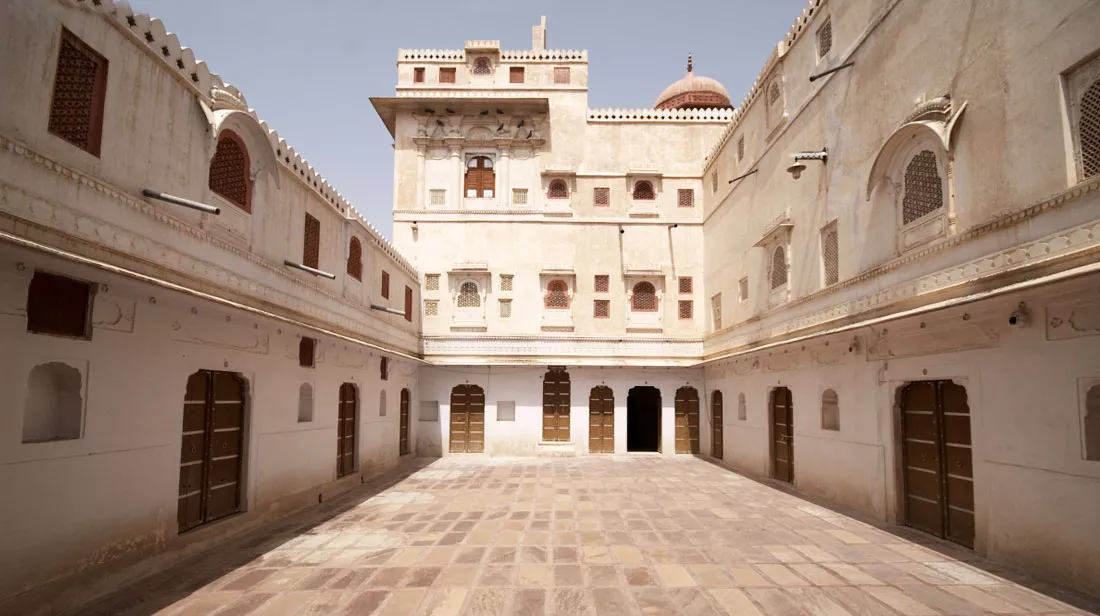 After breakfast we drive to Bikaner and check in our heritage hotel. Lalgarh Palace was built between 1902 and 1926 according to Rajput, Mughal and European architectural styles. The building was commissioned by Maharaja Ganga Singh and was designed by the British architect, Sir Swinton Jacob. It is coated in red sandstone and has several grand halls, lounges, cupolas and pavilions. The building features magnificent pillars, elaborate fireplaces, Italian colonnades and intricate latticework and filigree work. The palace houses the Shri Sadul Museum as well as a large and important collection of Sanskrit manuscripts, the Anup Sanskrit Library. In the afternoon we visit Junagarh Fort, built by Raja Rai Singh. Rai Singh had conquered part of Marwari and had been granted territory in Gujarat and Burhanpur by the Mughal emperor Akbar as a reward for his services as military commander. During his imperial service he travelled extensively, giving him an appreciation of art and architecture. These ideas have been incorporated meticulously into the architectural style of Junagarh Fort. Later we visit camel breeding farm set within the sand Dunes, the only farm of its kind in whole of Asia.
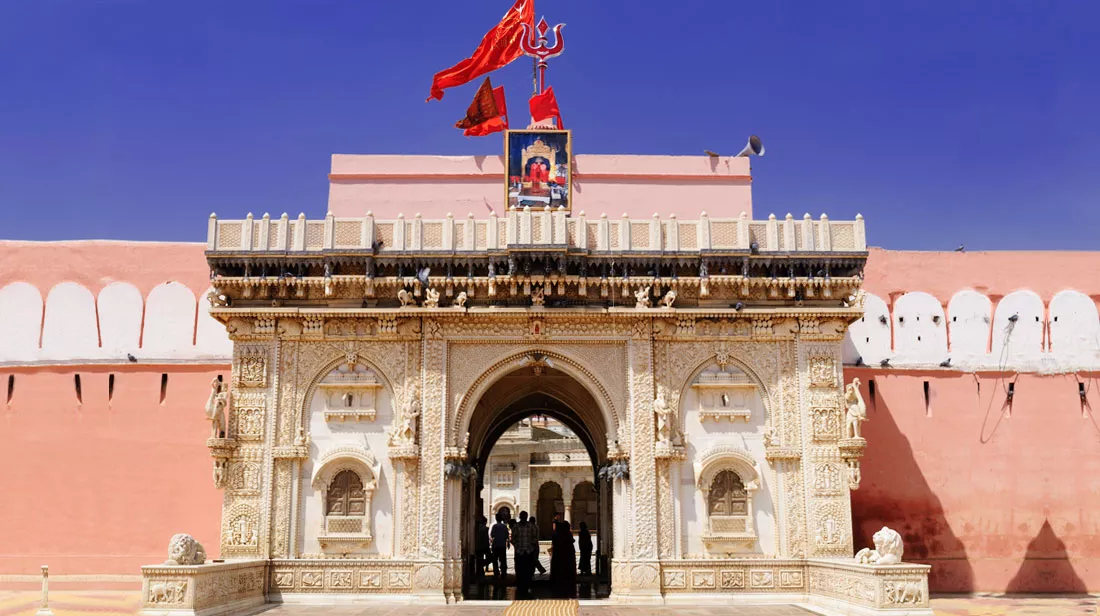 After breakfast we drive to Deshnoke to visit the famous Rat Temple dedicated to the Goddess Karni Mata. This ornate, isolated Hindu temple was constructed by Maharaja Ganga Singh in the early 1900s as a tribute to the rat goddess, Karni Mata. Intricate marble panels line the entrance and the floors, and silver and gold decorations are found throughout. But by far the most intriguing aspect of the interior are approximately 20,000 rats that call this temple home. These holy animals are called kabbas, and many people travel great distances to pay their respects. Later we drive to Mandawa, one of the finest of the small towns in the Shekhawati region. We explore Mandawa’s famous "The Open-Air Art Gallery of Rajasthan", visiting havelis, where the walls have been decorated with beautiful frescos depicting different aspects of the life in Rajasthan. From here we continue our drive to Alsisar and check in at Alsisar Mahal.

